Meta Ad Library is one of the most underutilized tools in digital advertising. It provides free, public access to every active ad running on Meta's platforms, Facebook, Instagram, Messenger, and the Audience Network. This is a massive dataset of competitive intelligence that most advertisers barely scratch the surface of. But most marketers use it the same way: scroll through a competitor's ads, screenshot a few that look good, and share them with the design team as "inspiration." This approach captures maybe 10% of the value available.
AdRiseLab's Ad Library Intelligence module captures the other 90% by layering AI analysis on top of raw Ad Library data, automatically tagging every ad with its creative strategy elements, identifying performance signals, surfacing industry-wide winning patterns, and providing a one-click path from competitive insight to original creative generation. It transforms Ad Library from a browsing tool into a strategic intelligence platform.
The Problem with Manual Ad Library Analysis
When you browse Meta Ad Library manually, you see images and copy. You can tell if an ad looks polished or low-quality, whether the headline is attention-grabbing, whether the overall style aligns with current trends. But you can't answer the questions that actually matter for your advertising strategy:
Why is this ad performing? What specific creative elements is the Andromeda algorithm rewarding? Is it the hook type? The visual composition? The color treatment? The text density? Manual analysis relies on subjective interpretation, you're guessing based on what looks good to you, not analyzing what the algorithm actually values.
How long has this ad been running? A long-running ad is worth inspecting because the advertiser kept it in market, but Ad Library does not show spend or results, so run time alone does not show that an ad is profitable. It is still a useful signal of what a competitor chooses to keep running. But Ad Library's interface doesn't make "days active" easy to calculate, and manually tracking competitors' ad launch dates is tedious.
What patterns exist across the top performers in this entire vertical? A single competitor's ads might show you their strategy, but the real intelligence is in category-wide patterns. If 72% of the longest-running ads in your niche share a specific combination of hook type, visual style, and color treatment, that pattern tells you what advertisers in your market keep running, and it is the first hypothesis worth testing. Identifying these patterns manually, across dozens of brands and hundreds of ads, would take days of analysis.
Manual analysis also introduces a dangerous bias: you tend to notice ads that appeal to your personal aesthetic rather than ads that the algorithm rewards. Your favorite competitor ad might be a beautifully designed brand piece that's actually underperforming, while the "ugly" UGC-style ad you scroll past might be the one they have kept running for 60+ days. AI analysis removes this bias by evaluating creative elements objectively.
How AdRiseLab's AI Analysis Works
AdRiseLab automates the entire competitive analysis workflow, transforming hours of manual browsing into minutes of structured intelligence.
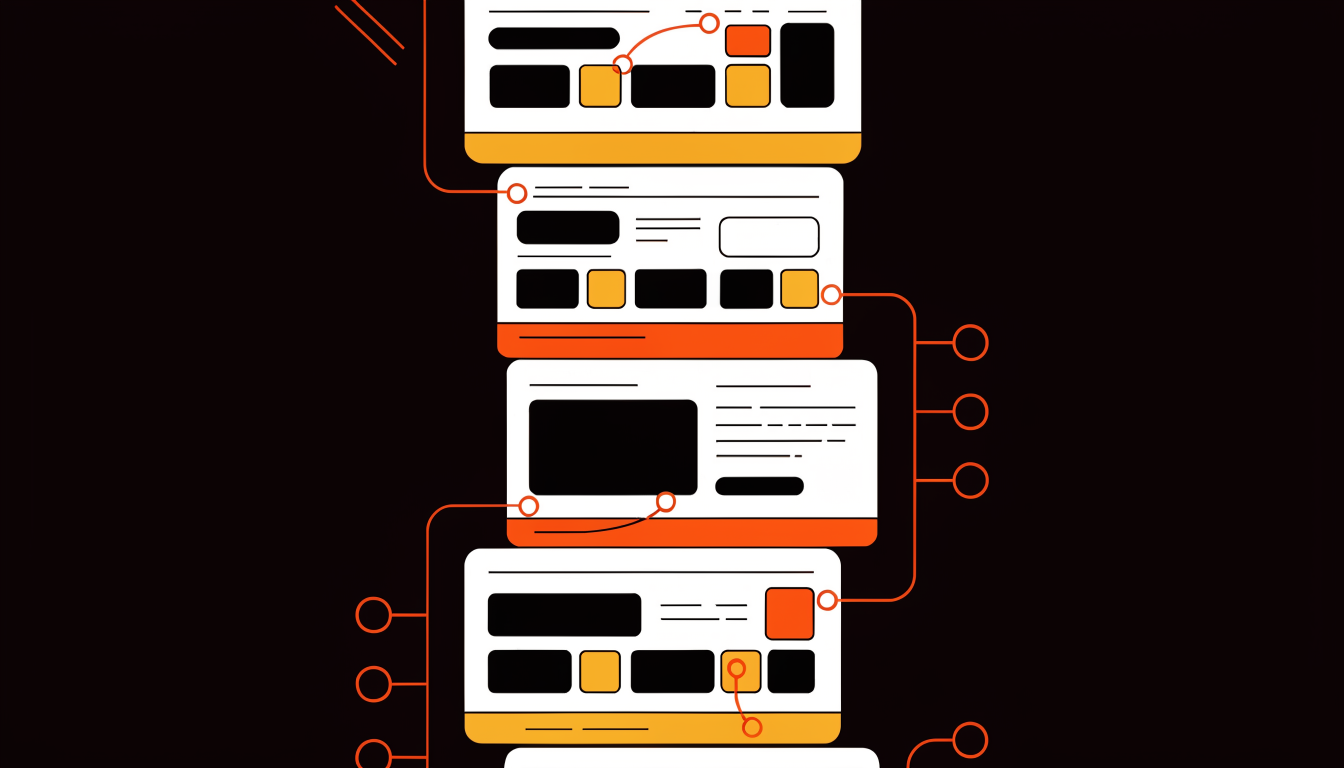
When you enter a competitor brand name or select an industry category, the platform pulls their active Meta ads and runs each one through a multi-dimensional AI tagging system. Every ad is automatically classified across these dimensions:
Hook Type Analysis identifies the psychological trigger being used, question, bold statement, social proof, curiosity, urgency, benefit-first, contrast, or problem-solution. Understanding a competitor's hook distribution tells you their creative strategy and reveals which hooks are underrepresented in your market (potential differentiation opportunities).
Visual Composition Tagging categorizes the visual structure, product-focused (hero product shot), lifestyle (product in use context), UGC-style (user-generated content aesthetic), graphic/text-heavy (designed graphics with prominent copy), before-after (transformation visuals), or flat-lay (overhead product arrangement). This tag reveals what visual formats the algorithm rewards in your category.
Color Scheme Classification maps the ad's color palette, warm (golds, oranges, reds), cool (blues, greens, purples), neutral (blacks, whites, grays), high-contrast (bold complementary colors), or muted (desaturated, soft tones). Color psychology significantly impacts ad performance, and category-level color patterns reveal algorithmic preferences.
CTA Type Identification tags the call-to-action, Shop Now, Learn More, Claim Offer, Sign Up, Get Started, Download, Contact Us, or custom CTAs. CTA type correlates with funnel stage and conversion intent.
Messaging Angle Analysis determines whether the copy is benefit-focused (emphasizes outcomes), feature-focused (emphasizes specifications), emotional (connects to feelings), rational (uses logic and data), comparison-based (positions against alternatives), or social (leverages community and trends).
Text Density Measurement classifies the ad as minimal text (clean, image-dominant), moderate text (headline + short body), or text-heavy (multiple text elements, information-dense). Text density significantly impacts Meta placement optimization, text-heavy ads often underperform in Stories and Reels.
Visual Style Detection identifies the production style, professional photography, illustration, 3D render, screenshot/UI capture, meme format, or mixed media. This reveals the production investment level and aesthetic preferences that perform well in your category.
The "Days Active" Signal: The Most Valuable Competitive Metric
One of the most valuable data points AdRiseLab surfaces is estimated days active for each competitor ad. This turns Ad Library from a snapshot of what competitors are doing into a record of what they choose to keep in market.
The logic has a limit worth stating: an ad that has been running for 45+ days is one the advertiser chose to keep in market. That makes it worth inspecting. It does not make it profitable, because Ad Library shows no spend or results, and an evergreen brand ad on a small budget or an account nobody is watching produces the same long start date. See what Meta Ad Library cannot tell you.
AdRiseLab calculates days active by tracking when each ad first appeared in Ad Library and monitoring its continued presence. You can filter competitor ads by days active to isolate the messages they keep in market. Treat those long-running ads as hypotheses to test in your own account, not as proof of what performs.
When you combine the days-active filter with the AI tagging system, powerful insights emerge. You're not just looking at all competitor ads, you're looking specifically at the ads they kept in market and analyzing what those ads have in common. This filtered view cuts out the short-lived experiments and gives you a shortlist of patterns to test in your own account.
Industry Winning Patterns: Category-Level Intelligence
Beyond individual competitor analysis, AdRiseLab aggregates data across entire industries to identify category-level patterns among long-running ads. This is competitive intelligence that no single competitor can provide, it's market intelligence.
For each product category, AdRiseLab analyzes the long-running ads (30+ days active) across dozens of brands to identify statistically significant patterns. Example insights:
"In the skincare DTC category, ads running 30+ days show a strong pattern, 72% use close-up product texture shots, 68% use warm-neutral color grading, and 81% lead with a benefit-first hook rather than a question or social proof hook. The average text density is moderate, and 64% use 'Shop Now' as their CTA."
"In the fitness supplements category, the pattern shifts, 58% of long-running ads use UGC-style visuals (not professional photography), 73% use social proof hooks (reviews, before/after, user testimonials), and high-contrast color schemes outperform warm tones by 2.3x in average days active."
"In the SaaS B2B category, product screenshot/UI-based creatives run 40% longer than lifestyle imagery, curiosity hooks outperform benefit-first hooks, and dark-mode visual treatments correlate with longer ad longevity."
These industry patterns give you a data-driven starting point for creative strategy rather than relying on intuition, personal preferences, or generic "best practices" that may not apply to your specific market. They tell you what the Andromeda algorithm is actually rewarding in your vertical right now, not what worked last year or what works in a different category.
The "Generate Similar" Button: From Insight to Action
The most powerful feature of Ad Library Intelligence is the "Generate Similar" button, the bridge between competitive insight and creative output.
When you identify a competitor ad or winning pattern you want to leverage, clicking "Generate Similar" triggers AdRiseLab's creative engine to generate original creatives that match the structural patterns, the hook strategy, composition style, color treatment, text density, and messaging approach, while using your own product images, brand colors, brand voice, and messaging.
This is explicitly not copying. It's structural intelligence, understanding why a creative format works at the algorithmic level and applying that structural understanding to your own brand. The concept is analogous to music theory: understanding that a song in a minor key with a specific chord progression creates emotional resonance doesn't mean copying the song, it means understanding the structure and applying it to your own composition.
The generated creatives use your product images extracted from your URL or Product Shoots library. They apply your Brand Library's colors, logo, and typography. They use your product's actual benefits and features as copy source material. The hook type, visual composition, and color treatment follow the winning pattern, but every element is original and brand-specific.
For example, if you identify that your top competitor's longest-running ad uses a curiosity hook, lifestyle photography with warm grading, moderate text density, and a "Shop Now" CTA, clicking "Generate Similar" produces 10 creatives for your product that follow this structural pattern while varying across the Hook Diversity Matrix to ensure your own signal diversity. You get the benefit of a proven pattern without the risk of creative homogeneity.
Competitor Tracking and Alerts
For ongoing competitive monitoring, AdRiseLab lets you set up competitor tracking profiles for up to 20 brands per workspace. Each tracked brand is automatically monitored for new ad launches, and you receive notifications when competitors launch new campaigns, when a competitor's ad crosses the 30-day active threshold (indicating a new winner), when significant creative strategy shifts occur (new hook types, visual styles, or messaging angles that the brand hasn't used before), and when a tracked competitor's ad volume increases significantly (indicating a scaling push).
These alerts ensure you're never caught off guard by competitor moves. If a competitor launches a new creative approach and it starts running for 30+ days, you know before they've fully scaled it, giving you time to analyze the pattern, generate your own version, and test before the competitive advantage is widely adopted across the category.
Building a Data-Driven Creative Strategy with Ad Library Intelligence
The most sophisticated agencies and brands use AdRiseLab's Ad Library Intelligence to build complete creative strategies, not just generate individual ads. The workflow looks like this:
Monthly: Run a category-wide analysis to identify current winning patterns and emerging trends. Compare against the previous month to spot shifts. Identify under-utilized signal patterns that represent differentiation opportunities.
Weekly: Review competitor tracking alerts. Analyze any new high-performing competitor ads. Generate test creatives that leverage new winning patterns.
Daily: Use the Andromeda Signal Panel to monitor your own creative performance. Cross-reference your Winners against the category winning patterns to understand why they're working. Use insights to inform the next generation run.
This continuous intelligence loop, analyze → generate → monitor → refine, creates a compounding advantage. Each cycle makes your creative strategy more data-informed, your generated creatives more aligned with algorithmic preferences, and your competitive position stronger. Over time, your account's creative portfolio becomes a reflection of the most effective signal patterns in your market, continuously updated and optimized.
Privacy, Ethics, and Fair Use
AdRiseLab's competitive analysis uses only publicly available data from Meta Ad Library, the same data any user can access by visiting the Ad Library website. The AI analysis adds intelligence on top of public data but does not access private advertiser data, internal metrics, or any non-public information. The "Generate Similar" feature creates original creatives that follow structural patterns, not copies of competitor assets. All generated content uses your own brand assets, product images, and messaging, ensuring full originality and brand ownership.
Related Reading
For the complete workflow overview, visit the competitor ad analysis hub. Master the manual approach first with our Meta Ad Library competitor analysis guide including the "days active" trick. See how AdRiseLab detects creative fatigue to know when your winning creatives need replacing. And explore AdRiseLab's competitor intelligence module for the full AI-powered analysis workflow.