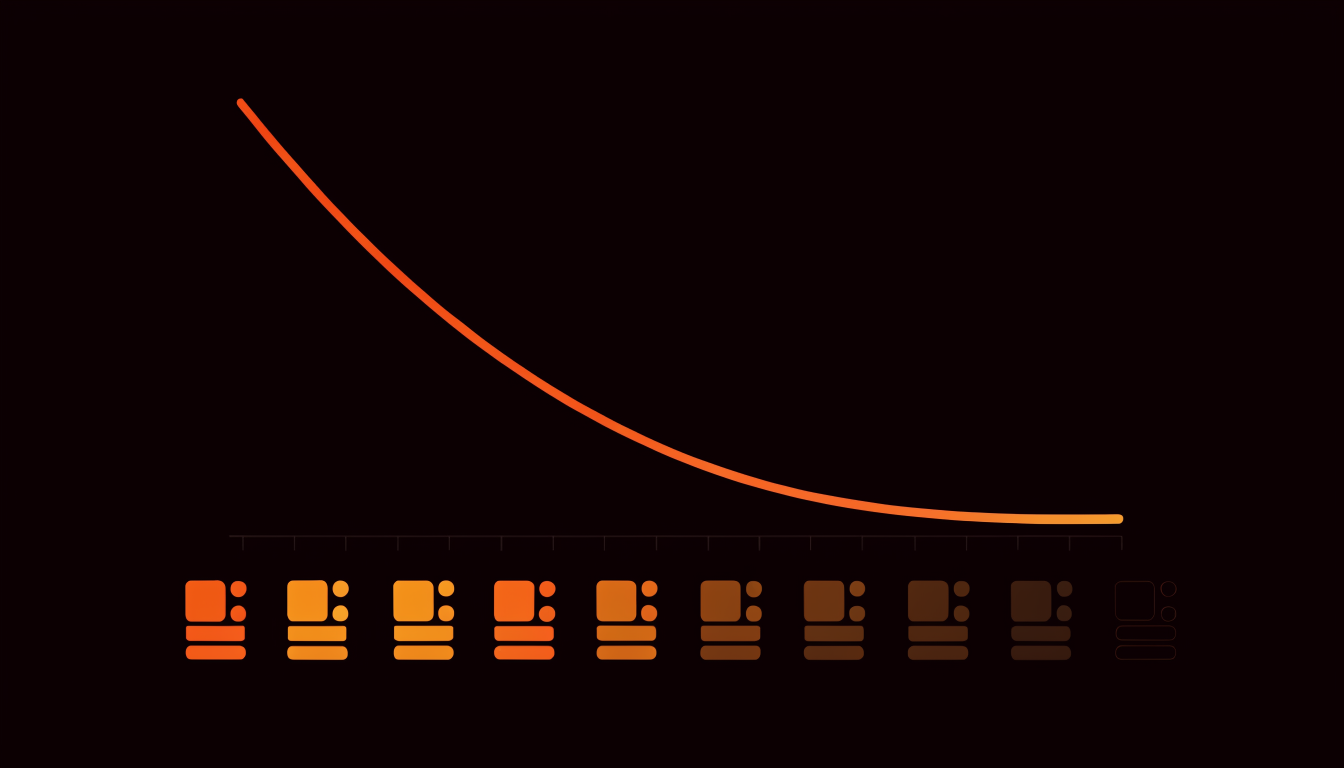
Creative fatigue is responsible for more Meta ad budget waste than any other single factor, more than poor audience targeting, more than suboptimal bidding strategies, more than campaign structure errors. Yet most advertisers discover it the same way: logging into Ads Manager after a bad week and wondering why a campaign that was working fine two weeks ago is suddenly bleeding money. By that point, you've already paid the tax. The creative fatigued days ago. You just didn't see it coming.
This guide covers the mechanics of creative fatigue in the Andromeda era, why it's happening faster than ever, the specific metrics that signal it before your ROAS tanks, and the practical rotation cadence that keeps your creative portfolio healthy.
What Is Creative Fatigue, And How It Differs from Audience Fatigue
Creative fatigue and audience fatigue are often conflated, but they're distinct phenomena with different causes, different signals, and different solutions. As Meta's own research on creative fatigue confirms, managing repeated exposures is critical for performance. Confusing the two leads to the wrong interventions, wasting time building new audiences when you should be refreshing creatives, or vice versa.
Audience fatigue occurs when you've exhausted the receptive users within a defined audience segment. The symptoms are declining reach (you're running out of new people to show the ad to), rising frequency (the same users see the ad repeatedly because new users are scarce), and CPM inflation caused by reduced auction competition for the remaining users. The solution is expanding or changing audience targeting, finding new pools of users.
Creative fatigue occurs when users who haven't been exhausted as an audience stop engaging with a specific creative. The audience is still there; the creative has lost its effectiveness. Symptoms include declining CTR even as reach remains stable, increasing impressions without proportional increases in clicks or conversions, and rising CPMs driven by the algorithm's quality score downgrade (not audience scarcity). The solution is replacing or rotating the creative, not the audience.
In practice, the two types of fatigue often occur together, a fatigued creative delivered to a partially saturated audience creates a particularly bad performance situation. But under the Andromeda algorithm, creative fatigue is almost always the primary driver of performance decline in well-structured accounts. The algorithm's dynamic audience discovery means audiences are generally less the bottleneck than creative signal quality.
Why Creative Fatigue Is Faster and More Dangerous Under Andromeda
In the pre-Andromeda era, a well-performing creative might sustain strong results for 4-8 weeks before showing meaningful fatigue. Under Andromeda v4.1, the lifecycle for high-spend accounts has compressed to 7-14 days for active creatives in competitive verticals. Several Andromeda-specific mechanisms accelerate this compression.
The algorithm's retrieval efficiency means your best creatives are shown to their most receptive micro-audiences very quickly. The Andromeda system is exceptionally good at finding high-intent users who respond to a specific creative signal. The upside: faster ramp to peak performance. The downside: faster exhaustion of that micro-segment, because the algorithm finds them quickly and serves them the ad more aggressively than the legacy system would have.
Entity ID quality score decay is a second accelerator. As a creative accumulates declining engagement signals, slower scroll stops, lower CTR trends, reduced save and share rates, the algorithm progressively downgrades its quality score. This is a feedback loop: lower quality score → less favorable delivery → fewer impressions to high-intent users → further CTR decline → further quality score downgrade. Once this decay cycle begins, it accelerates. The creative doesn't plateau at reduced performance, it deteriorates.
The account-level frequency mechanism introduced in v4.1 adds another dimension. Even users who haven't seen a specific creative before experience reduced engagement if they've been frequently exposed to other creatives from your account. This cross-creative frequency effect means that if you're running a large, active account, even "fresh" creatives launch into a partially fatigued environment. Maintaining creative diversity is partly about preventing this account-level frequency accumulation.
Four Leading Indicators of Creative Fatigue
The goal of early fatigue detection is identifying the decay signals before they appear in your lagging ROAS and CPA metrics. Four specific leading indicators, monitored at the individual creative level, give you a 5-10 day early warning window.
CTR velocity is the most reliable early signal. Rather than watching absolute CTR, watch the 72-hour rate of change. A creative at 1.8% CTR is either healthy or fatiguing, you can't tell from the absolute number alone. But a creative that was 2.4% three days ago and is now 1.8% is showing a significant negative velocity: -25% over 72 hours. This velocity trend, sustained over two measurement windows (6 days total), predicts imminent significant decline with high accuracy. Most advertisers only check CTR as a snapshot; the velocity is the predictive signal.
Frequency acceleration provides a second early signal. Track not just your current frequency metric, but how quickly it's increasing. A frequency of 2.8 isn't inherently problematic. But frequency that was 1.9 five days ago and is now 2.8 is accelerating at a rate that indicates the algorithm is running short on fresh users in the creative's primary micro-segment. Frequency acceleration predicts the onset of the saturation phase, typically 5-7 days before it fully manifests in ROAS metrics.
Impression share decay is a subtler but powerful signal. When Andromeda begins losing confidence in a creative's signal quality, it gradually reduces that creative's share of account delivery, shifting impressions toward other creatives in the set. This happens slowly: a 2-3% daily reduction in impression share that starts days before any meaningful CTR or CPA change. In standard daily reporting, this drift is invisible. But when you track each creative's impression share as a percentage of account total over a 7-day window, declining creatives reveal themselves through this gradual redistribution before their absolute metrics deteriorate.
CPM micro-trends are the fourth leading indicator. The dramatic CPM spikes that accompany full creative fatigue, 30-50% increases, are well-known. Less well-known is the micro-trend that precedes them: a 3-5% daily CPM increase over 5-8 days before the spike. This gradual inflation reflects the algorithm's progressive re-evaluation of the creative's signal value in the delivery auction. Monitoring daily CPM changes at the individual creative level (not campaign average) catches this early signal.
Manual Detection: Ads Manager Metrics and Time Windows
You don't need third-party tools to detect creative fatigue early, you can build a manual monitoring cadence using native Ads Manager reporting with the right metrics, columns, and time window comparisons.
Set up a custom column view in Ads Manager that includes: CTR (all), Frequency, Reach, Impressions, CPM, CPC (all), Amount Spent, Results, and Cost per Result. This gives you the raw data for all four leading indicators in a single view. Then, critically, use comparison mode: set your primary date range to the most recent 3 days and your comparison range to the 3 days before that. This 3-day vs. 3-day comparison at the creative level surfaces velocity trends that weekly or monthly views hide entirely.
Run this comparison view every 2-3 days for active creatives in high-spend accounts ($300+/day), or every 5-7 days for moderate-spend accounts. Look for creatives showing negative velocity across multiple metrics simultaneously, CTR declining AND CPM rising AND impression share shifting. When two or more of these signals appear together in the same creative, fatigue is beginning regardless of what the absolute metric values look like.
The time window of analysis matters enormously. Checking weekly performance misses the early signals entirely, a creative can go from Declining to Fatigued within a single week. Daily check-ins with 3-day rolling comparisons are the minimum cadence for accounts spending $500+ per day. Monthly reporting is suitable for low-spend accounts ($50-$150/day) where the fatigue lifecycle is slower.
When to Pause vs. When to Iterate on a Creative
Not every declining creative should be immediately paused. The decision depends on how far the creative is through its fatigue lifecycle and whether the underlying creative concept (separate from specific executional elements) is still sound.
Pause immediately when: the creative is showing negative velocity across all four leading indicators simultaneously, its Fatigue Risk Score is above 85 (if using a tool that calculates this), or its CPM has already spiked more than 20% above its baseline. At this stage, continued spend is producing worse results than what a fresh replacement creative would generate. The creative has crossed into active signal quality degradation, and pausing protects both your budget and your account's overall quality score.
Iterate (generate a variation, don't just pause) when: the creative is showing decline in one or two metrics but the hook concept or visual approach is showing strong engagement signals in other dimensions, for example, a declining CTR but unusually high save rate or comment rate. This pattern suggests the core concept is resonant but the execution or delivery context needs refreshing. Generate a variation that uses the same hook strategy with different visual execution, color treatment, or text framing. This extends the concept's useful life without fully abandoning what's working.
Let it run when: the creative is showing slight negative velocity but is still within the "Active" status range, CTR decline is minimal (under 10% over 72 hours), CPM is stable, and impression share hasn't shifted significantly. At this stage, monitoring closely and preparing replacement creatives is the right move, but pausing prematurely sacrifices delivery volume that the creative is still earning efficiently.
The 7-14 Day Rotation Rule for Competitive Accounts
In competitive verticals on Meta (e-commerce, DTC consumer goods, finance, real estate, health and wellness), the 7-14 day rotation rule is the current best-practice cadence for Andromeda v4.1.
The rule: every 7-14 days, add at least 3-5 new creatives with distinct Entity IDs to your active creative set, and pause the 2-3 creatives showing the strongest decline signals. This isn't a complete creative replacement, you're maintaining a rolling portfolio of 10-20+ active creatives with continuous partial refresh. The rotation keeps your average signal quality high, prevents account-level frequency buildup, and gives the algorithm constant new signals to explore.
The 7-day mark is appropriate for accounts spending $500+/day in competitive verticals where the fatigue cycle is compressed. The 14-day mark is appropriate for accounts spending $100-$500/day or in less competitive verticals with longer creative lifecycles. For accounts spending under $100/day, a monthly rotation cadence is typically sufficient, the lower delivery volume means creatives accumulate engagement signals more slowly and fatigue less quickly.
The most common mistake in implementing rotation is treating it as a batch replacement event rather than a continuous rolling process. Teams that rotate by completely replacing their entire creative set every 3-4 weeks experience performance dips during the "new creative ramp" period, the week or two it takes new creatives to accumulate sufficient delivery data for the algorithm to optimize against them. Rolling rotation (partial refresh on a regular cadence) maintains algorithmic momentum without the ramp-up penalty.
Building a Fatigue-Resistant Creative Portfolio
Beyond rotation cadence, the architecture of your creative portfolio determines its baseline fatigue resistance. A well-structured portfolio distributes creative signals across hook types, visual styles, color treatments, and messaging angles, ensuring that if one type of signal fatigues, others remain fresh and continue driving discovery.
A fatigue-resistant portfolio for a $20,000/month Meta account might look like: 4-5 lifestyle-focused creatives using benefit-first or question hooks, 3-4 clean studio-style creatives using bold statement or social proof hooks, 3-4 UGC-style or testimonial creatives using problem-solution hooks, and 2-3 offer/urgency-focused creatives for remarketing or promotional periods. This distribution ensures no single hook type or visual style dominates your account's signal profile, which both prevents concentrated fatigue and maintains high Entity ID diversity.
Think of your creative portfolio as an investment portfolio: concentration in a single asset (creative signal type) maximizes upside when that signal performs, but creates devastating downside when it fatigues. Diversification smooths the curve and maintains consistent performance even as individual creatives cycle through their lifecycle.
Creative fatigue management is not a reactive problem-solving exercise, it's a proactive operational discipline. Advertisers who build monitoring habits, maintain rotation cadences, and architect diverse creative portfolios don't eliminate fatigue (it's inevitable), but they prevent it from becoming the budget-bleeding emergency that it is for most teams.
If you're looking for a faster way to maintain the creative volume needed to outpace fatigue, AdRiseLab generates Andromeda-optimized creatives from any product URL in under 30 seconds, making weekly creative refreshes operationally feasible for any team. Try AdRiseLab free.
Related Reading
Understand how the Andromeda algorithm actually works and why Entity ID diversity matters more than audience targeting. See how AdRiseLab's fatigue detection catches declining creatives 5-10 days before ROAS drops. And learn how many creatives your account actually needs based on your monthly spend level.