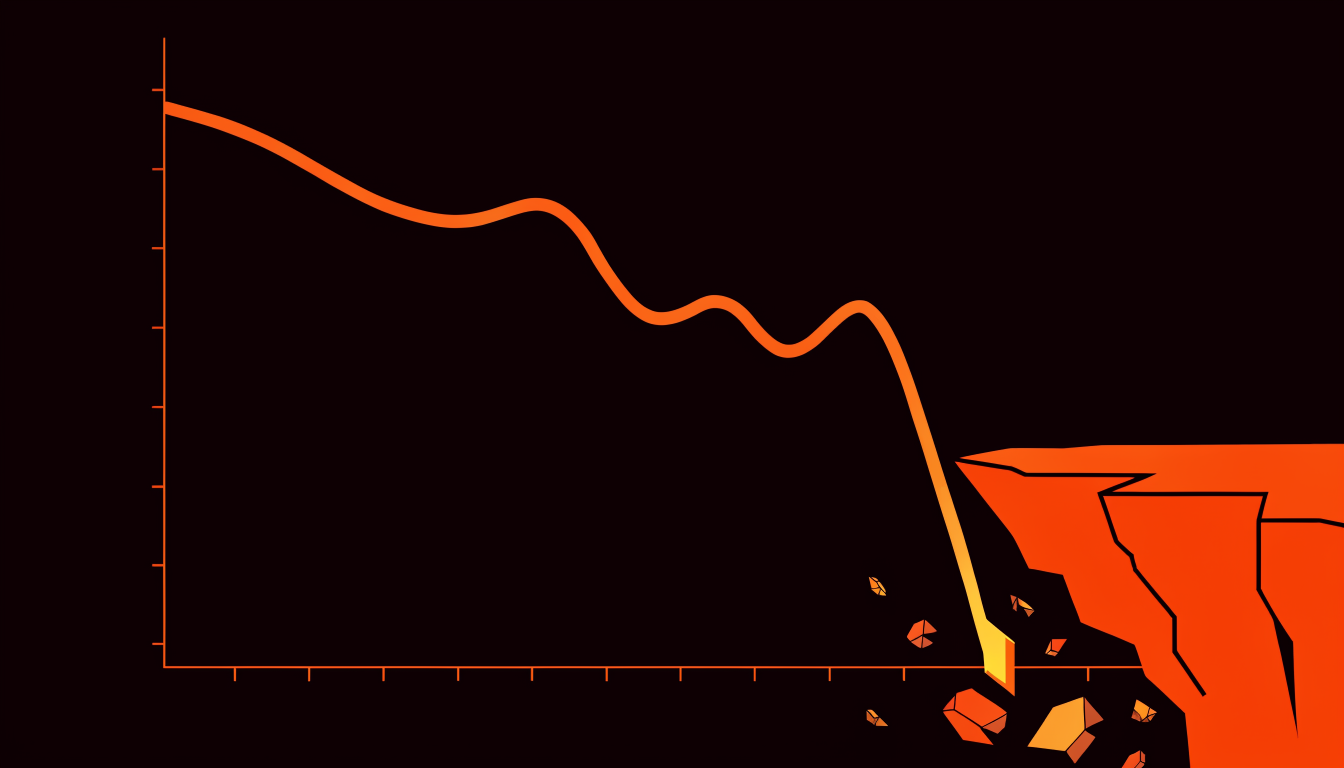
You've seen this pattern before. A new Meta ad launches, ROAS looks great for the first week, your CPA is hitting targets, and you start thinking about scaling. Then somewhere around day 8 to 12, the numbers start sliding. CTR drops 15%. CPM creeps up. CPA jumps from $28 to $38, then to $45. By day 14, you're pausing the ad and starting over from scratch. Most advertisers blame the algorithm, bad luck, or "Meta being Meta." The real cause is creative decay, a predictable, measurable phenomenon that follows consistent patterns once you understand the mechanics behind it.
What Creative Decay Actually Is
Creative decay is the progressive degradation of an ad's performance over time, driven by audience saturation and signal exhaustion within Meta's delivery system. It's not your ad suddenly becoming "bad." The ad hasn't changed. What changed is the relationship between your ad and the audience pool it has been shown to.
Under Meta's Andromeda algorithm, every ad carries what's essentially a signal fingerprint. When your ad first enters the auction, Andromeda has a fresh signal to explore. It tests the ad across many micro-audiences, learning which user clusters respond best. During this exploration phase, your ad gets shown to the most receptive people first — the low-hanging fruit. This is why early performance almost always looks better than sustained performance.
You can put one of your own ads against these decay signals with the fatigue score checker. As the algorithm exhausts the highest-responding audience segments, it moves to progressively less responsive clusters. Each new audience segment your ad reaches converts at a slightly lower rate than the previous one. Simultaneously, users who've already seen your ad start seeing it again, and repeat exposures produce diminishing returns. The combination of audience exhaustion and frequency buildup is what creates the decay curve.
The Three Phases of Creative Decay
Phase 1: The Honeymoon (Days 1–5). Your ad enters the auction with a fresh Entity ID. Andromeda explores aggressively, testing the ad across diverse audience segments. The algorithm is prioritizing learning over efficiency, showing your ad broadly to gather signal data. CPMs may be slightly elevated during this phase as the system optimizes delivery, but conversion rates tend to be high because the algorithm is finding your most responsive audiences first. This is the phase where most advertisers fall in love with their new creative.
Phase 2: The Plateau (Days 5–10). The algorithm has identified your ad's best-performing audience segments and concentrates delivery there. Performance stabilizes. CPAs level off, CTR is consistent, and ROAS finds its equilibrium. This is where your ad's "true" performance lives. The numbers you see during the plateau — not the honeymoon — are the realistic benchmark for that creative. Many advertisers mistake the honeymoon numbers for baseline performance and then panic when the plateau arrives. The plateau isn't decline; it's reality.
Phase 3: The Decay (Days 10+). The ad has now been shown to most of the high-value audience segments available at your budget level. Frequency starts climbing. Users who've seen your ad 3 or more times are less likely to engage, and the algorithm has fewer fresh audience pockets to explore. CTR begins a steady decline, which triggers a cascade: lower CTR signals lower relevance to Meta's auction system, which increases CPMs, which raises CPAs. Once this cascade starts, it accelerates. An ad that was profitable at day 7 can be unprofitable by day 14.
Why 10 Days Isn't a Coincidence
The 10-day mark isn't arbitrary. It corresponds to the point where most ads at moderate budgets ($50 to $300 per day) have exhausted their primary audience pool at frequency 1 to 2. At $100 per day with a $15 CPM, your ad generates roughly 6,600 impressions per day, or about 66,000 impressions over 10 days. If your target market on Meta is 500,000 to 2,000,000 people, that means you've reached a meaningful fraction of the addressable audience at least once.
Higher budgets compress this timeline. An ad spending $500 per day might hit the decay phase by day 5 to 7. Lower budgets extend it — ads at $30 per day might not show significant decay until day 20 to 25. The mechanism is the same; only the speed changes. Understanding your specific decay timeline based on your budget and audience size is the first step to managing it.
Account-level frequency also plays a role. In Andromeda v4.1, frequency is tracked across all ads in your account, not just individual creatives. If you're running multiple ads to the same broad audience, the cumulative frequency effect means individual ads may decay faster than their own metrics suggest, because users have already been exposed to other ads from your account.
The Metrics That Predict Decay Before It Happens
The worst time to detect creative decay is when your CPA spikes. By then, you've already wasted budget. The best advertisers detect decay 3 to 5 days before it impacts bottom-line metrics by tracking leading indicators.
CTR velocity is the earliest warning signal. Don't look at absolute CTR — look at the direction and speed of change. A creative with 2.4% CTR that was at 2.8% three days ago is decaying, even though 2.4% is a "good" number in isolation. Calculate the 3-day rolling average of CTR and flag any creative showing 3 or more consecutive days of decline. That pattern predicts a CPA increase within 5 to 7 days with roughly 80% accuracy.
CPM micro-inflation is the second signal. Before a creative's CPM jumps dramatically (the signal most advertisers watch for), it typically increases by 2 to 4% per day for several days. This gradual inflation reflects the algorithm downgrading the creative's expected engagement rate, which reduces its competitiveness in the auction. Track daily CPM at the creative level — not the campaign level — to catch this early.
Frequency acceleration is the third signal. Early in an ad's life, frequency increases slowly because the algorithm is still finding new audience segments. When frequency starts climbing faster — jumping from 1.8 to 2.1 to 2.5 in quick succession — it means the algorithm has exhausted its discovery pool and is now re-serving to existing audiences. This acceleration is a reliable predictor that the creative is entering the decay phase.
The Creative Refresh System
Knowing that creative decay is predictable and measurable allows you to build a system that prevents it from destroying your performance. The goal isn't to eliminate decay — it's biologically inevitable whenever a human sees the same stimulus repeatedly. The goal is to refresh creatives before decay impacts your results.
Step 1: Establish your decay timeline. Look at your last 10 to 20 creatives and identify when each one started showing CTR velocity decline. Average those numbers. For most accounts spending $3,000 to $15,000 per month, the average decay onset is 10 to 16 days. For accounts above $15,000 per month, it's 7 to 12 days. This is your refresh window.
Step 2: Build a creative pipeline. Based on your refresh window, calculate how many new creatives you need per week. If your decay onset averages 12 days and you run 8 active creatives, you need to replace roughly 4 creatives per week to maintain consistent performance. This math is simple but the implications are significant — most advertisers massively underinvest in creative production relative to what their accounts actually consume.
Step 3: Stagger your launches. Don't launch all new creatives on the same day. Stagger launches across the week so that at any given time, your active creative set includes ads at different stages of their lifecycle — some in the honeymoon phase, some at plateau, and some approaching decay. This staggering creates consistent blended performance instead of the boom-bust cycle that comes from batch launches and batch pauses.
Step 4: Monitor and rotate. Set up a daily check (or use a tool that automates this) on the three leading indicators: CTR velocity, CPM micro-inflation, and frequency acceleration. When a creative triggers two or more of these warning signals, schedule it for replacement within 3 to 5 days. Don't wait for CPA to spike — act on the leading indicators.
Why "Just Make Better Ads" Doesn't Solve Decay
A common response to creative decay is "make higher-quality creatives that last longer." This misunderstands the problem. Creative decay is not caused by ad quality — it's caused by audience saturation. A brilliant ad decays just as reliably as a mediocre one. The brilliant ad might have a higher performance ceiling during its plateau phase, but the decay pattern is the same. In fact, very strong creatives can decay faster because the algorithm concentrates delivery more aggressively on them, burning through their audience faster.
The real solution isn't quality alone — it's quality multiplied by volume. You need a continuous stream of genuinely diverse creatives, not just one or two "perfect" ads refreshed every few weeks. Andromeda rewards creative diversity at the Entity ID level, which means variations need to differ across visual layout, color treatment, hook type, copy angle, and compositional structure. Simple changes like swapping a headline or adjusting colors don't create sufficient Entity ID separation to qualify as genuinely new creatives from the algorithm's perspective.
The Math Behind Sustainable Creative Operations
Let's make this concrete. An account spending $10,000 per month on Meta ads with an average creative lifespan of 14 days needs approximately 6 to 8 new creatives per week to maintain a healthy active set of 12 to 15 creatives. At traditional production rates (a designer creating 2 to 3 polished ads per day), this requires roughly half of a full-time designer's capacity dedicated entirely to Meta creative production. For most small and mid-size businesses, this is unsustainable.
This is exactly the problem that AI creative generation solves. Tools like AdRiseLab can generate diverse ad creatives from a product URL in minutes, producing the volume of genuinely distinct creatives that manual production can't match at the same cost. The competitive advantage isn't just speed — it's the ability to sustain a creative refresh cadence that keeps your account healthy week after week.
Building Your Anti-Decay Playbook
Here's the playbook, consolidated into actionable steps. First, audit your current creative decay timeline by analyzing historical creative-level data for CTR velocity patterns. Second, calculate your required weekly creative volume based on that timeline and your active creative count. Third, establish a staggered launch schedule so your active set always contains creatives at different lifecycle stages. Fourth, set up daily monitoring on the three leading indicators. Fifth, build a creative production pipeline — whether in-house, agency, or AI-powered — that can sustain the required weekly volume without bottlenecks.
Creative decay is not a mystery. It's not bad luck. It's a predictable consequence of how digital advertising delivery systems work. The advertisers who treat it as a known variable and build systems around it will consistently outperform those who react to it after the damage is done. The 10-day cliff doesn't have to be a surprise — it can be a scheduled event in your creative operations calendar.
Related Reading
Understand Meta's Andromeda algorithm and how creative signals drive delivery. Learn about creative fatigue detection and the full spectrum of fatigue signals. See how AdRiseLab detects fatigue 10 days early with its signal panel. And explore how many creatives you really need to sustain performance in the Andromeda era. If the ad never earned meaningful spend in the first place, why Meta gives most new creatives little delivery is the diagnosis to start from instead.